
ECONOMIC EMPOWERMENT
A skill learned today is income managed tomorrow. This is not a metaphor.
In Northern Uganda, families with at least one member with a disability are on average 30% poorer than those without. Only 9% of commercial loans go to women.
Subsistence farming, without access to better seeds or irrigation techniques, cannot withstand the climate shocks that are arriving more and more frequently.
CEFARH works on these structural issues with concrete tools: vocational training with real job prospects, access to financial instruments, and support for entrepreneurship and resilient agriculture.
The goal is not to create dependency on programs
— it is to build the conditions for families to operate independently.
What we do
Vocational training
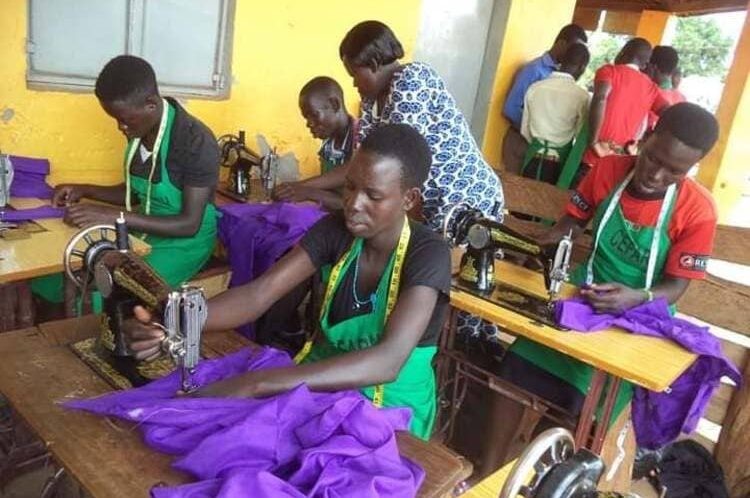
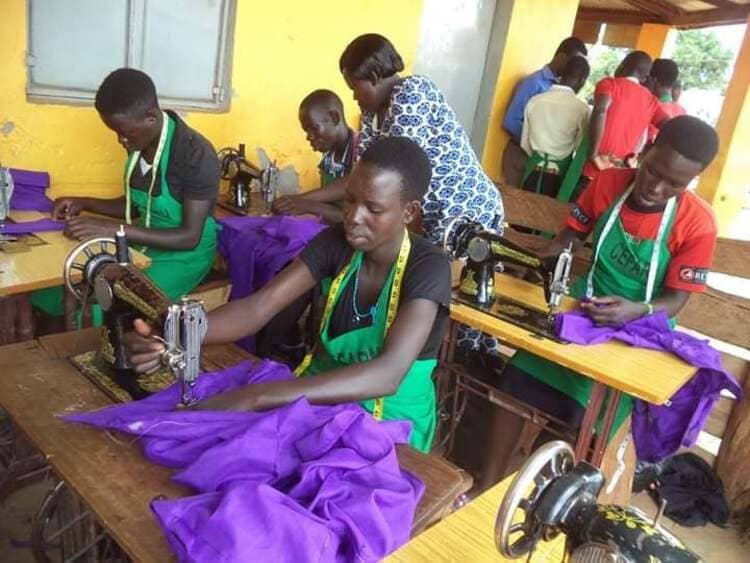
Hands-on courses in carpentry, welding, tailoring, mechanics and construction — trades with real demand in the local market. Not just theory: training is focused on finding employment or starting a business.
The Alessandra Technical and Vocational Institute
A vocational training institute built in Northern Uganda as a permanent infrastructure for professional training and social entrepreneurship. Not a temporary project: a physical place that belongs to the community and generates opportunities over time.
Savings, microcredit and VSLA groups
We promote Village Savings and Loan Associations (VSLAs) — savings and lending groups that provide access to credit without bank intermediaries. For many women, this is the first financial tool they manage on their own. A real shift in perspective.
Sustainable agriculture and climate adaptation
Improved seeds, tools, irrigation techniques and training in climate-resilient farming practices. Working the land more efficiently means more harvest, more income, and more investment in children’s education and health.
Mentoring and entrepreneurship development
Support programs for young people and women who want to start or grow a business. Not just technical skills: we work on the ability to plan, manage and sustain a business over time.
Our impact
young people with certified vocational training in trades for self-sufficiency
young people on an informal vocational reintegration path
vocational institute built as a social enterprise — the Alessandra Technical and Vocational Institute
Where we are headed
- Increase household income by 30% within the third year of the strategic plan
- Support 200 families with income-generating activities, and 300 caregivers with financial literacy training
- Train 400 new young people and women through 20 active mentoring programs
- Support 1,000 farmers with inputs and install 15 irrigation systems